Photonics iREU in Paris
An NSF international REU at Université Paris-Saclay: a summer of lasers, detectors, and optical tables, doing photonics research in my third language.
On the optical table
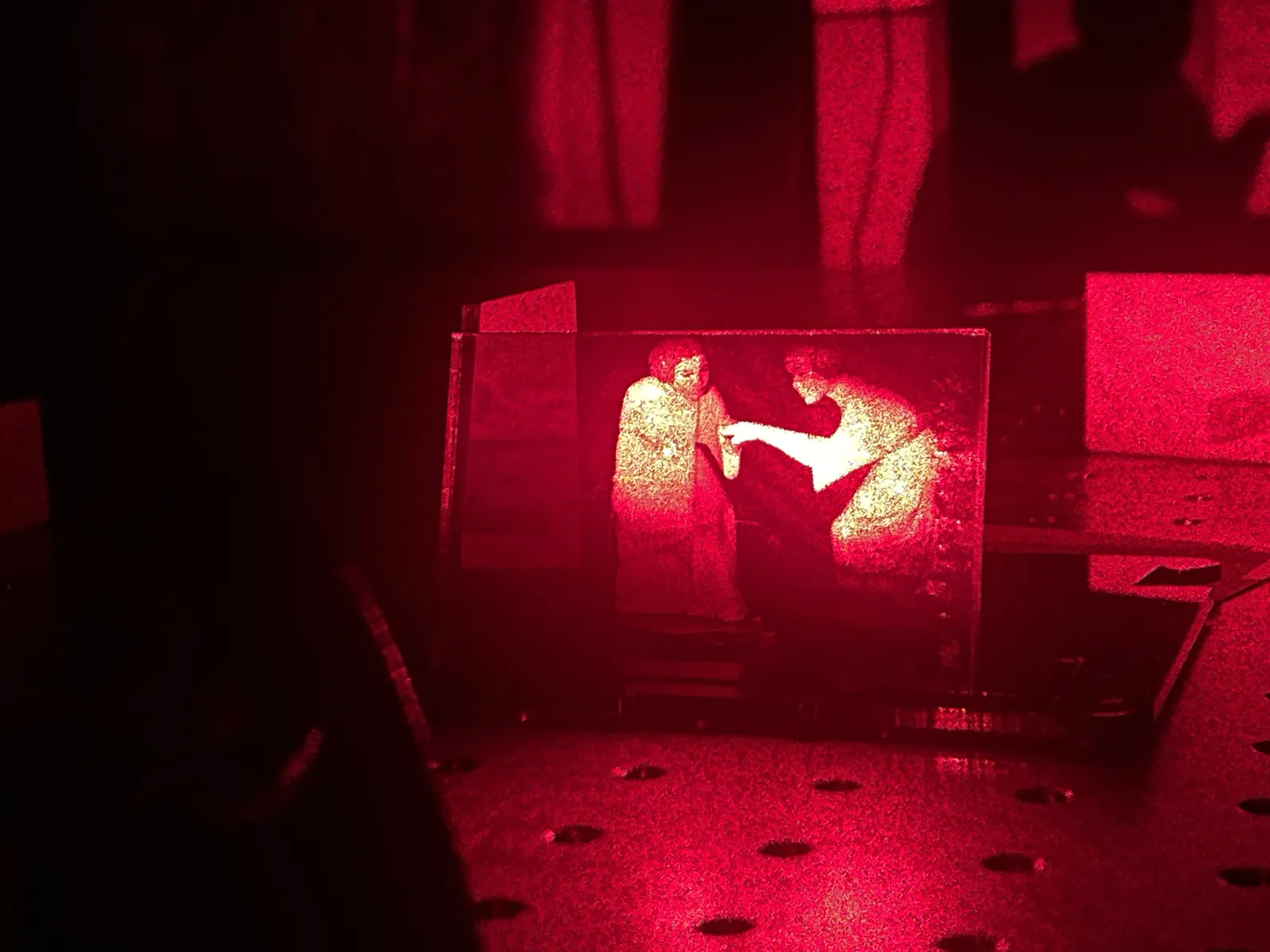
I built, aligned, and debugged optical and electronic experimental setups with lasers and detectors. Day to day that meant bolting mounts to the table, squaring lenses and mirrors, walking the beam element by element with micrometer adjustments, and finding the optic out of plane, the drifting mount, or the bad cable when the output did not match theory. Alignment is where optics gets honest. The beam either hits the detector or it does not, and micrometers matter.
In simulation
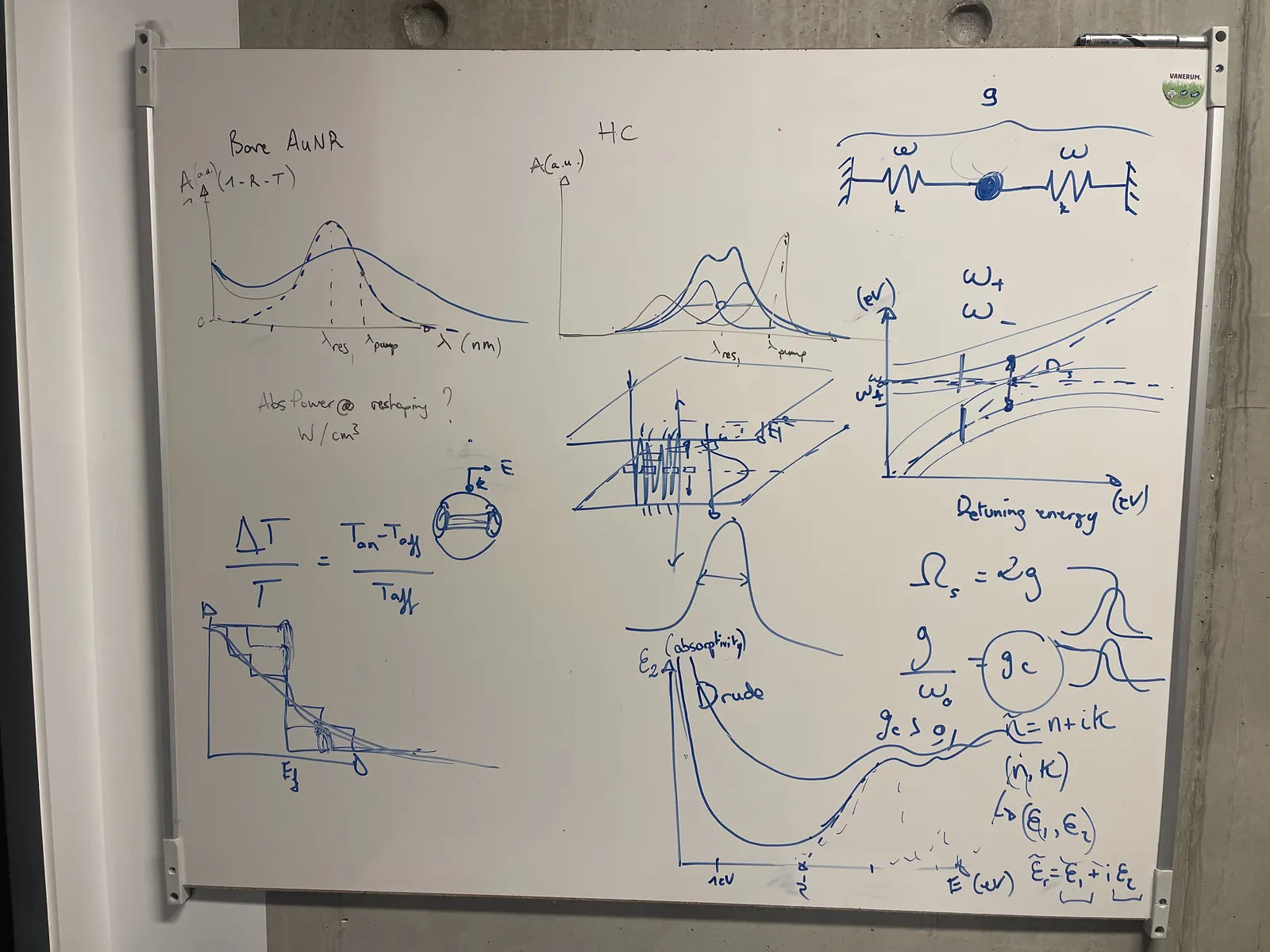
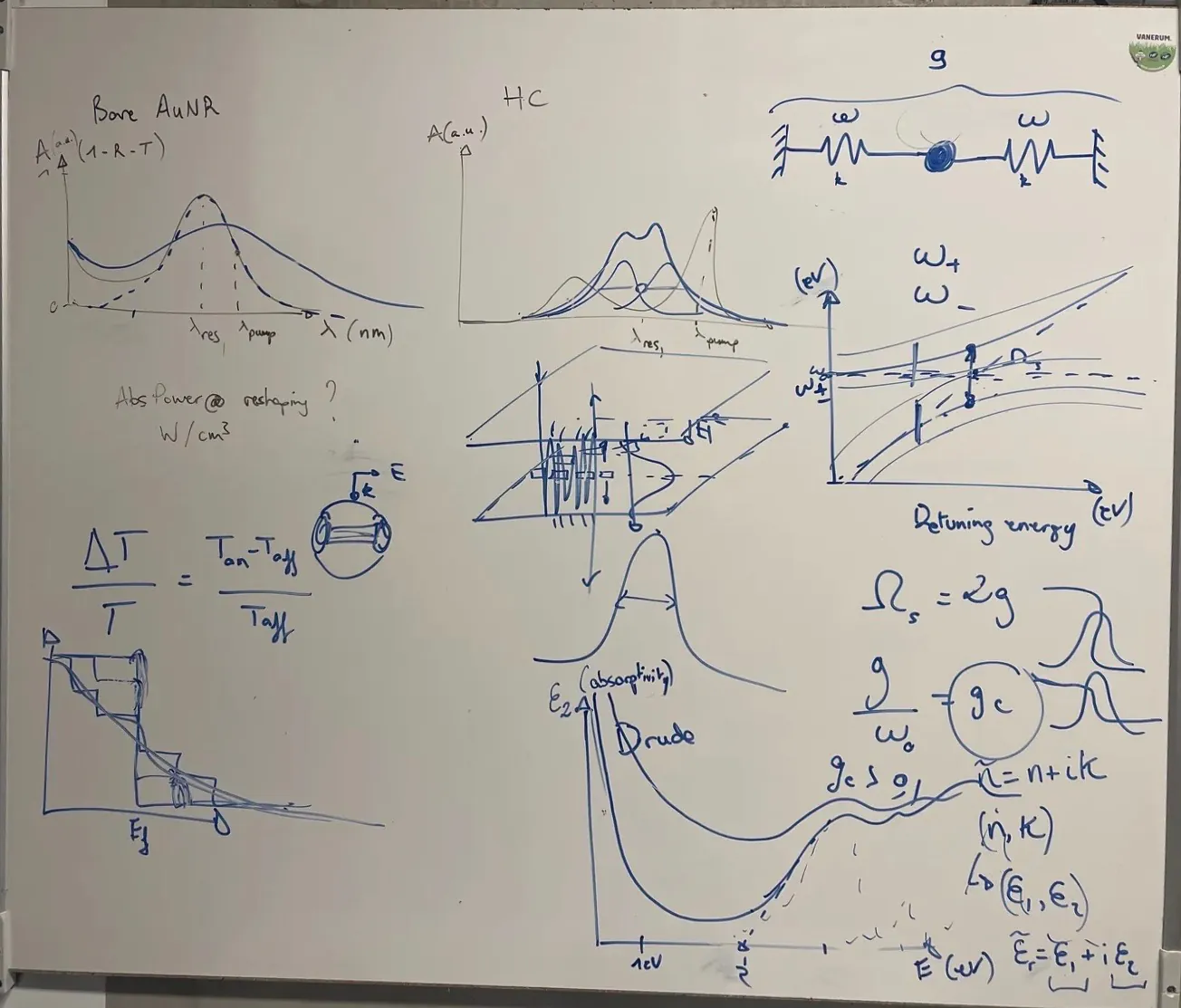
I wrote a Lumerical FDTD script that models a hybrid photonic-plasmonic cavity: a gold nanorod sitting in an alumina defect layer inside a multilayer Bragg reflector. The script sweeps three geometric parameters in nested loops (the gap between rods, the rod length, and the cavity order, meaning how many standing wave antinodes the defect layer spans) and runs two simulations per combination: the bare nanorod first, to locate its resonance, then the full cavity tuned to that exact wavelength so the two start at zero detuning. Each run collects absorption, reflection, and transmission spectra, finds the two hybridized absorption peaks that mark strong coupling, and converts their energy splitting into a coupling strength, with a tolerance check so a noisy single peak never gets mistaken for Rabi splitting. Optional passes map the electric field at resonance and probe how a small change in the background index shifts the spectra. The headline trend: coupling strength falls as the cavity order or the gap grows. The full write-up is in the report below.
Special thanks
To Professeur Bruno Palpant, Benedict S. Morris, and Luis Santos, for all their help and guidance.