Polymer Rheology
I went into this project chasing a reversible shear-activated gel: a fluid that turns solid when you shear it and melts back when you let it rest. It did not work, and why it did not work turned out to be the interesting part. I synthesized two charged polymers, measured how each responds to shear on a rheometer, and presented the results at a national conference.
The science
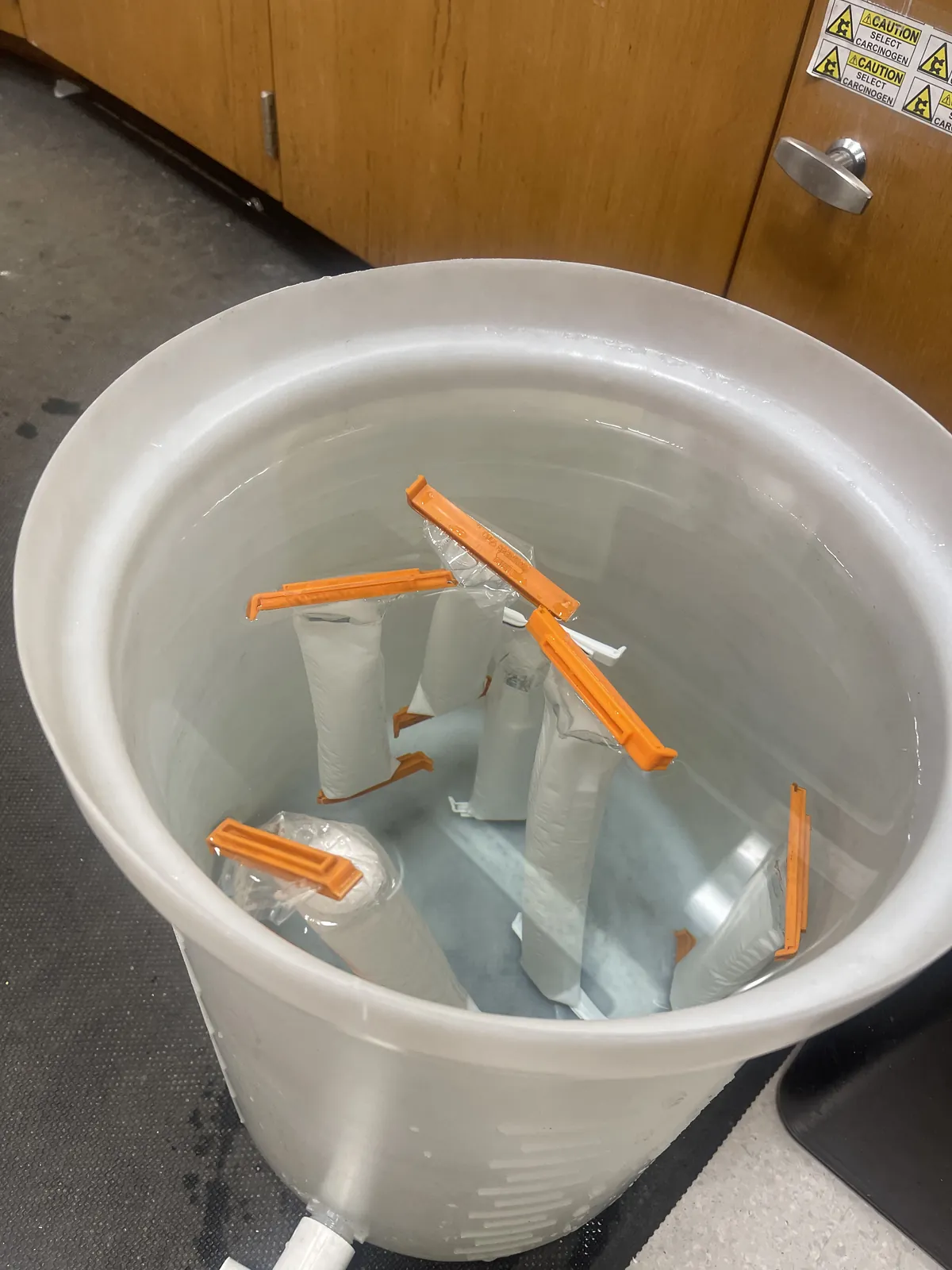
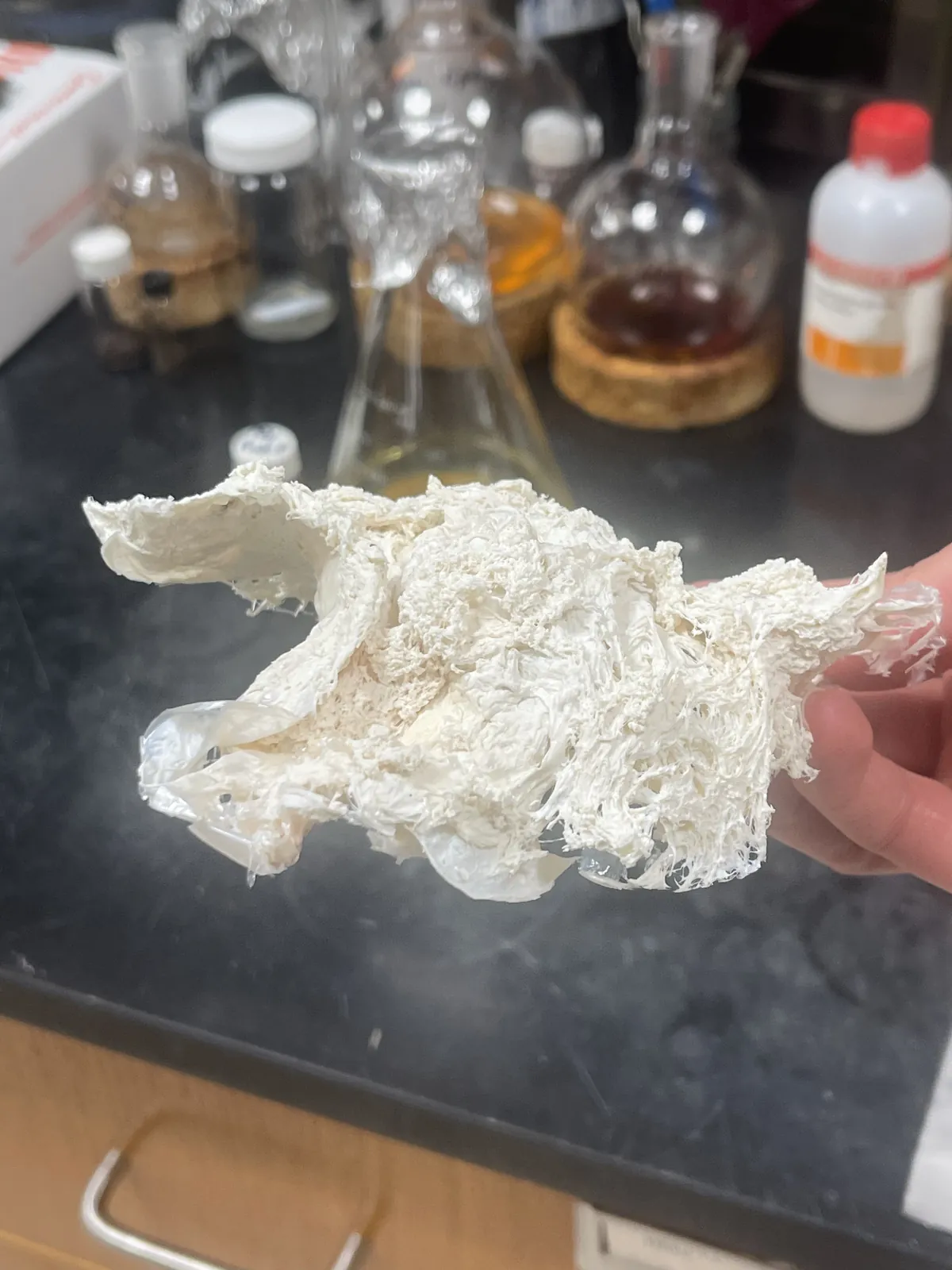
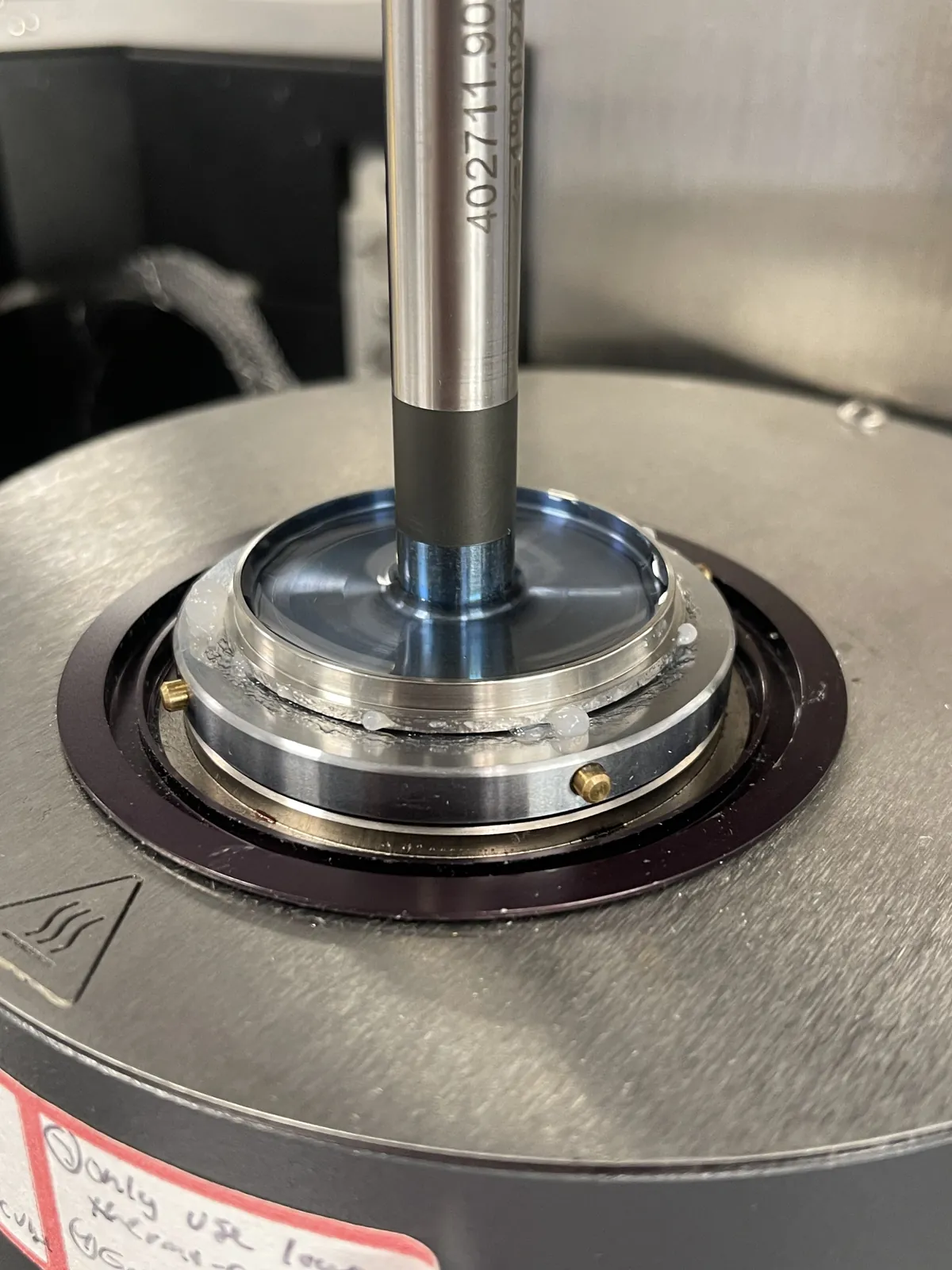
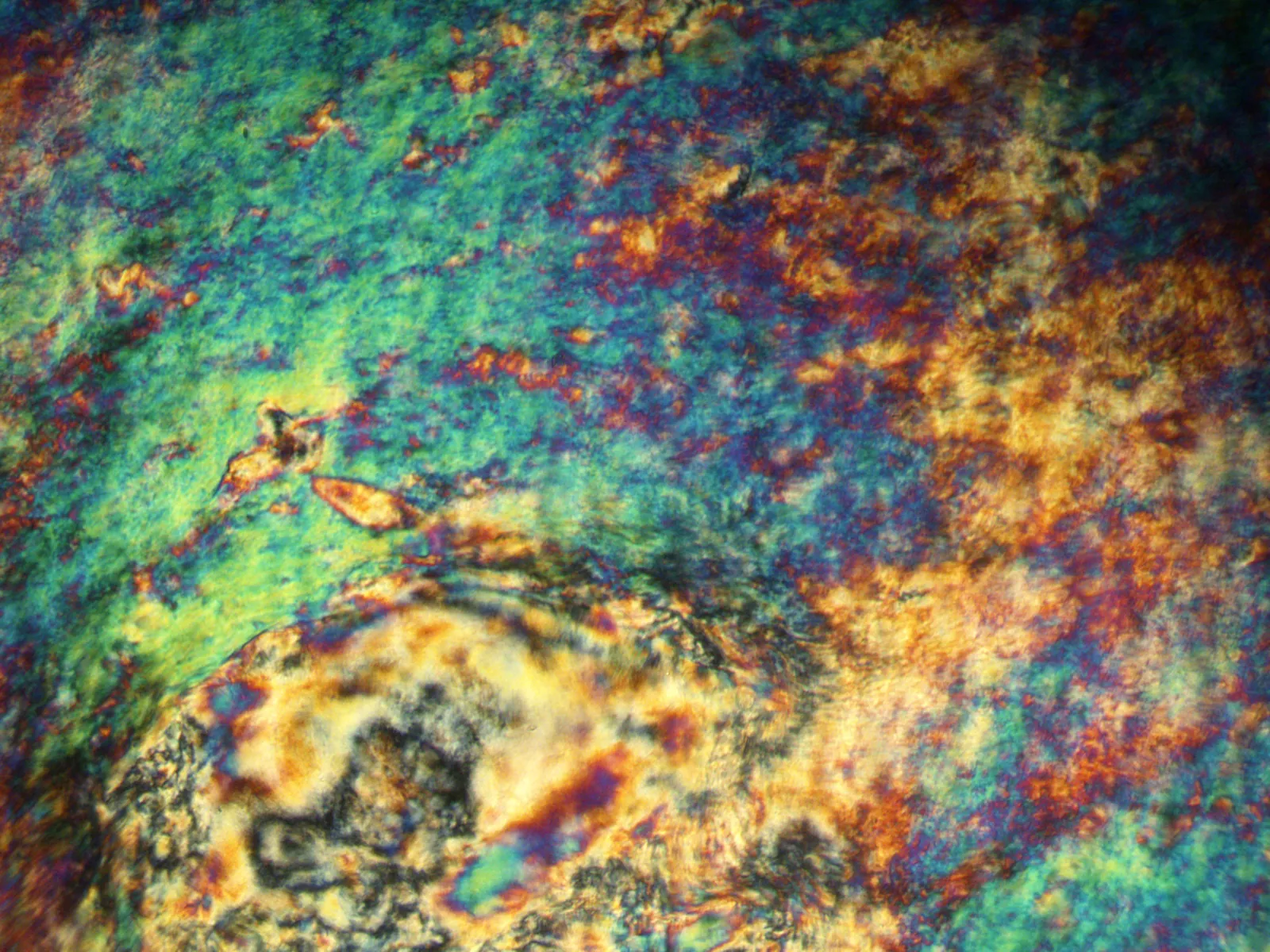
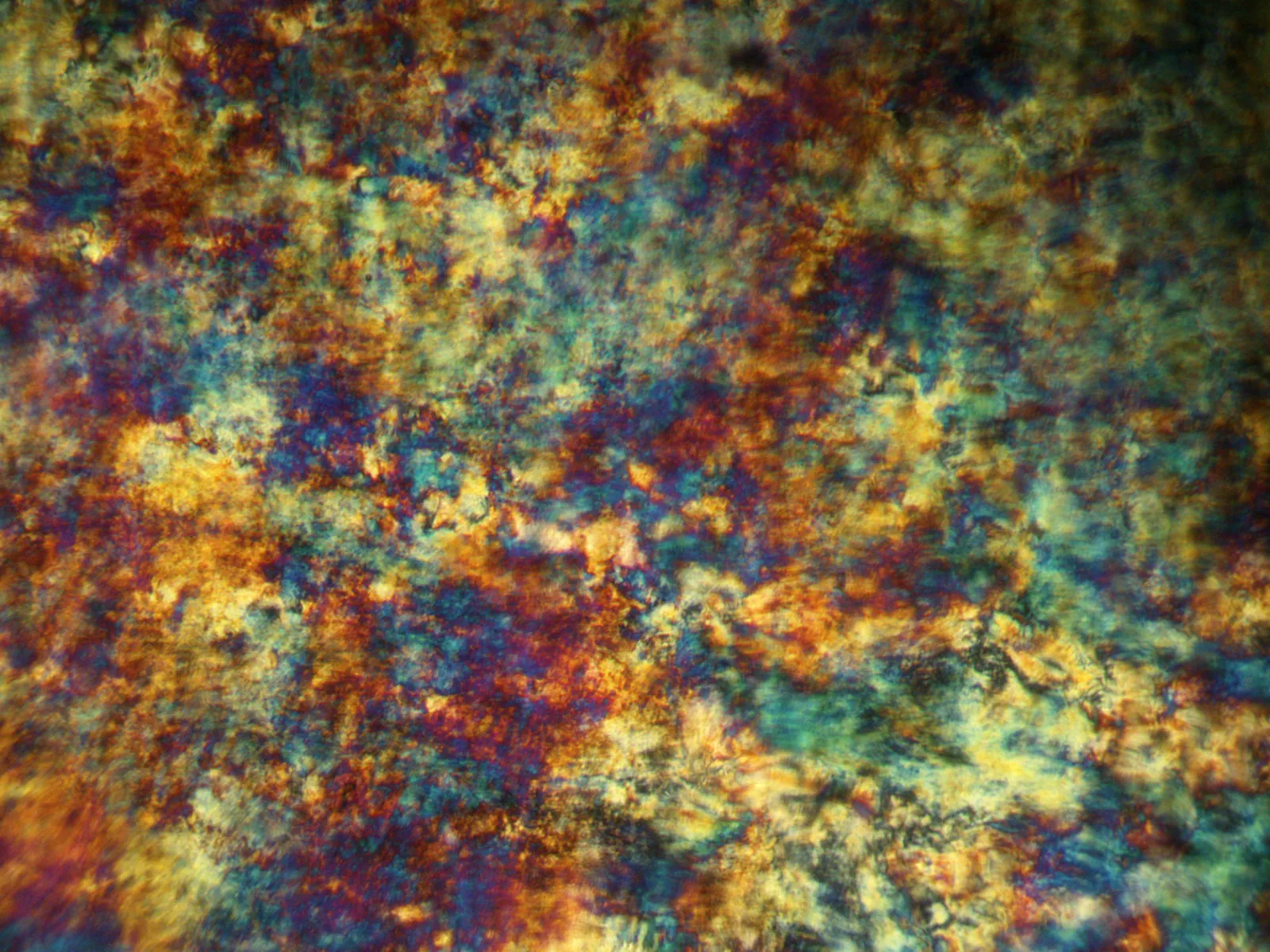
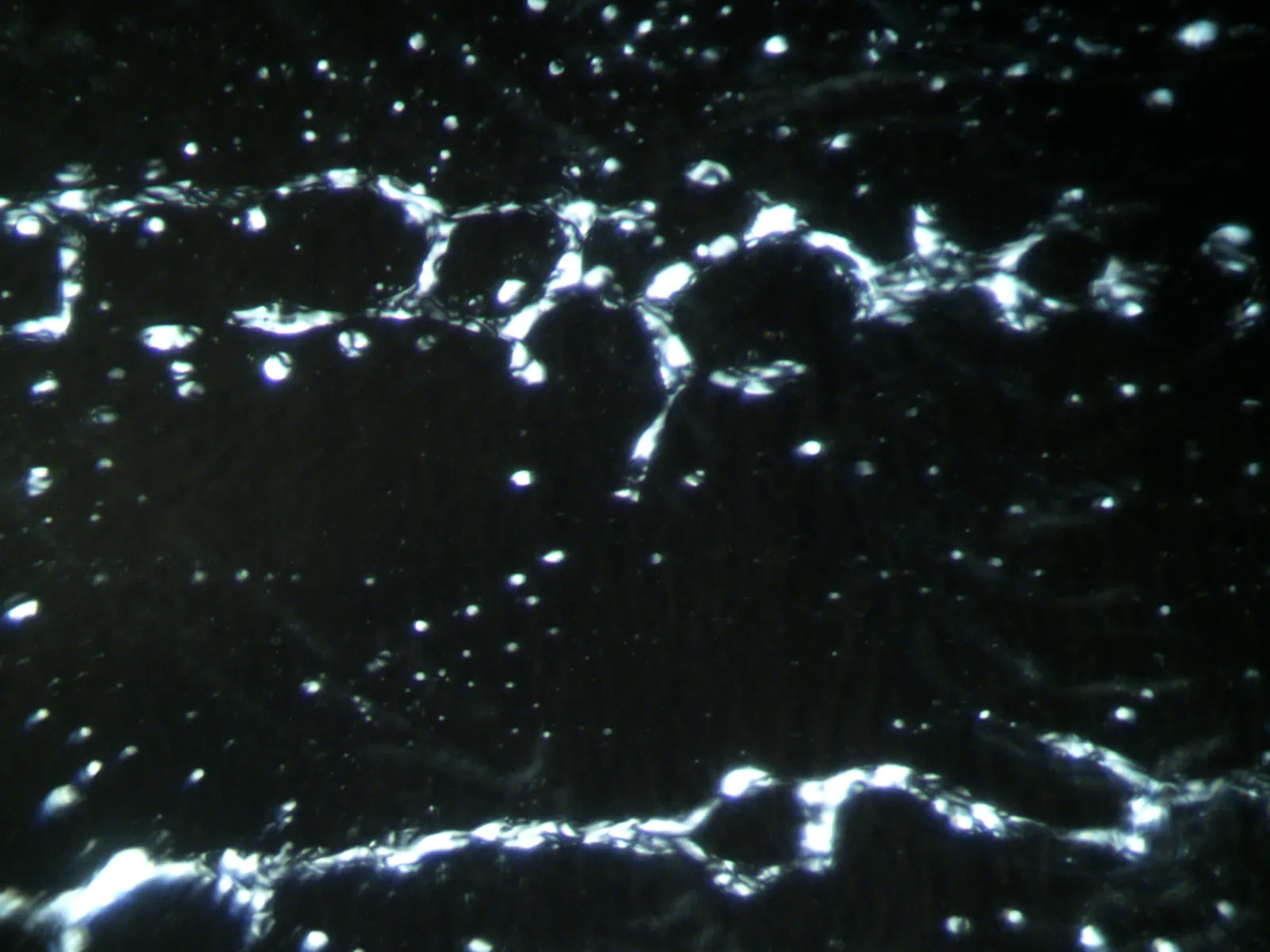
PBDT and PBDI are water-soluble charged polymers that differ by a single bond angle in the backbone. PBDT forms rigid rods that align into liquid crystal domains at concentrations below 1 wt%. PBDI has a kink that keeps it fully isotropic. PBDT was already known to gel under shear; the rheology of PBDI had never been studied. I ran the full synthesis for both, from monomer purification through dialysis and drying, then measured concentration series on a cone-and-plate rheometer and imaged the solutions under polarized light.
What I found
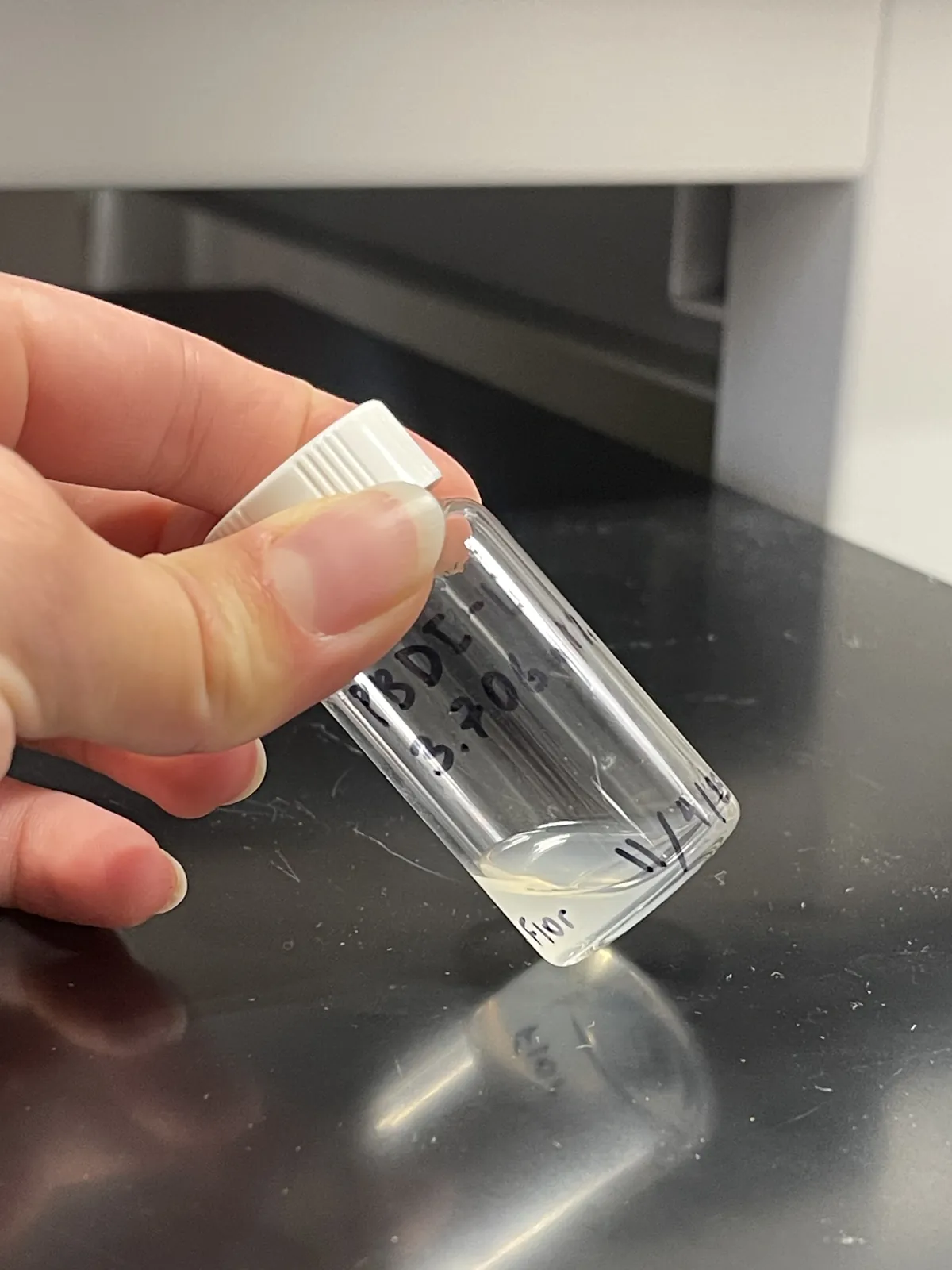
That PBDT gels irreversibly under shear was published by Fox and coworkers in 2020; their paper is cited in my poster. I replicated the result at different concentrations: above a critical shear rate, my 7.7 wt% solution locked into a solid gel within seconds and never melted back. PBDI never gelled at any concentration I tested; it only shear-thins, reversibly, the way ketchup does. So I never found the reversible shear-activated gel I was after, at least not at the concentrations I tested, and the comparison shows how much a single exocyclic bond angle controls what shear does to the network.
The PBDT result I replicated: Fox et al., ACS Macro Letters 2020The award
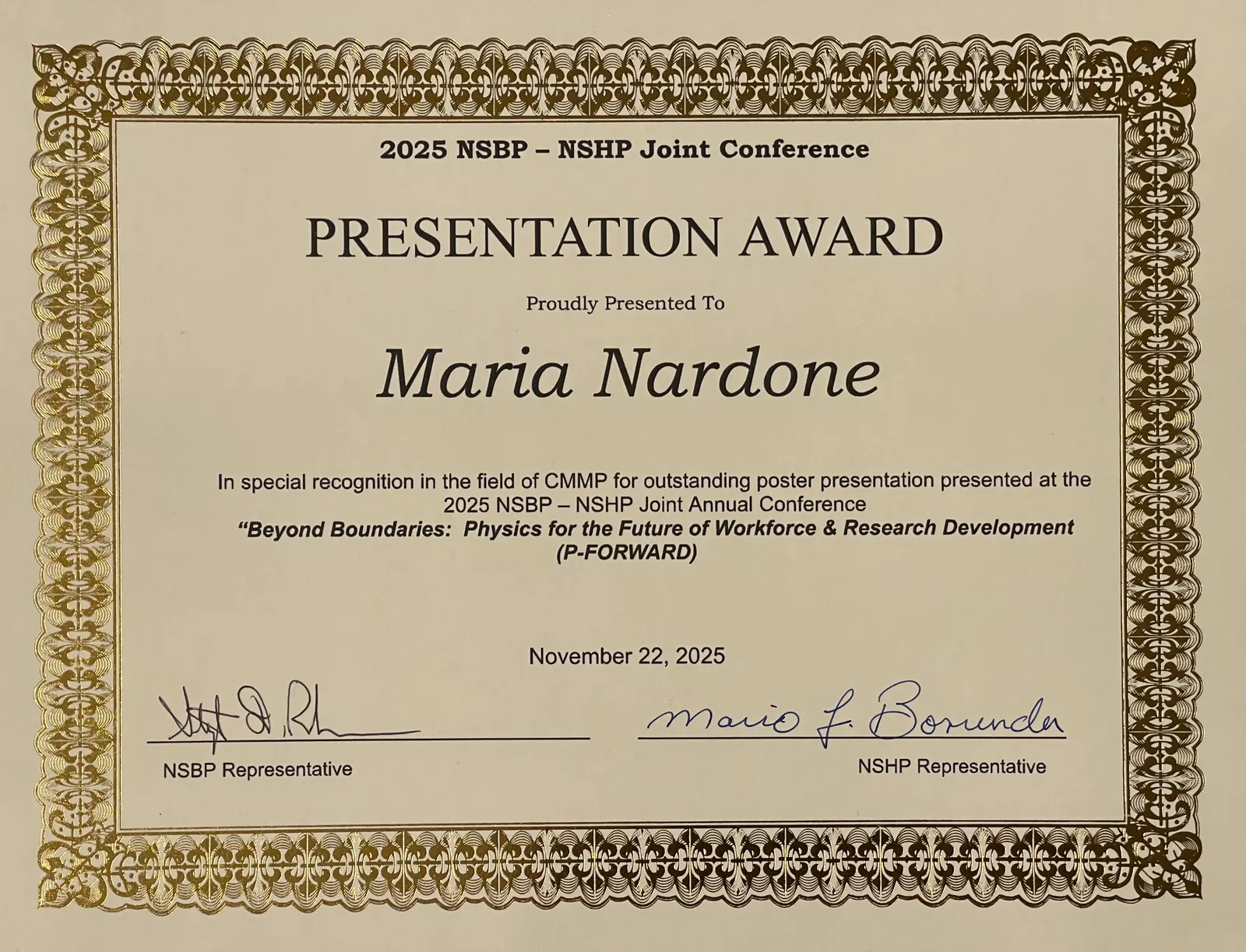
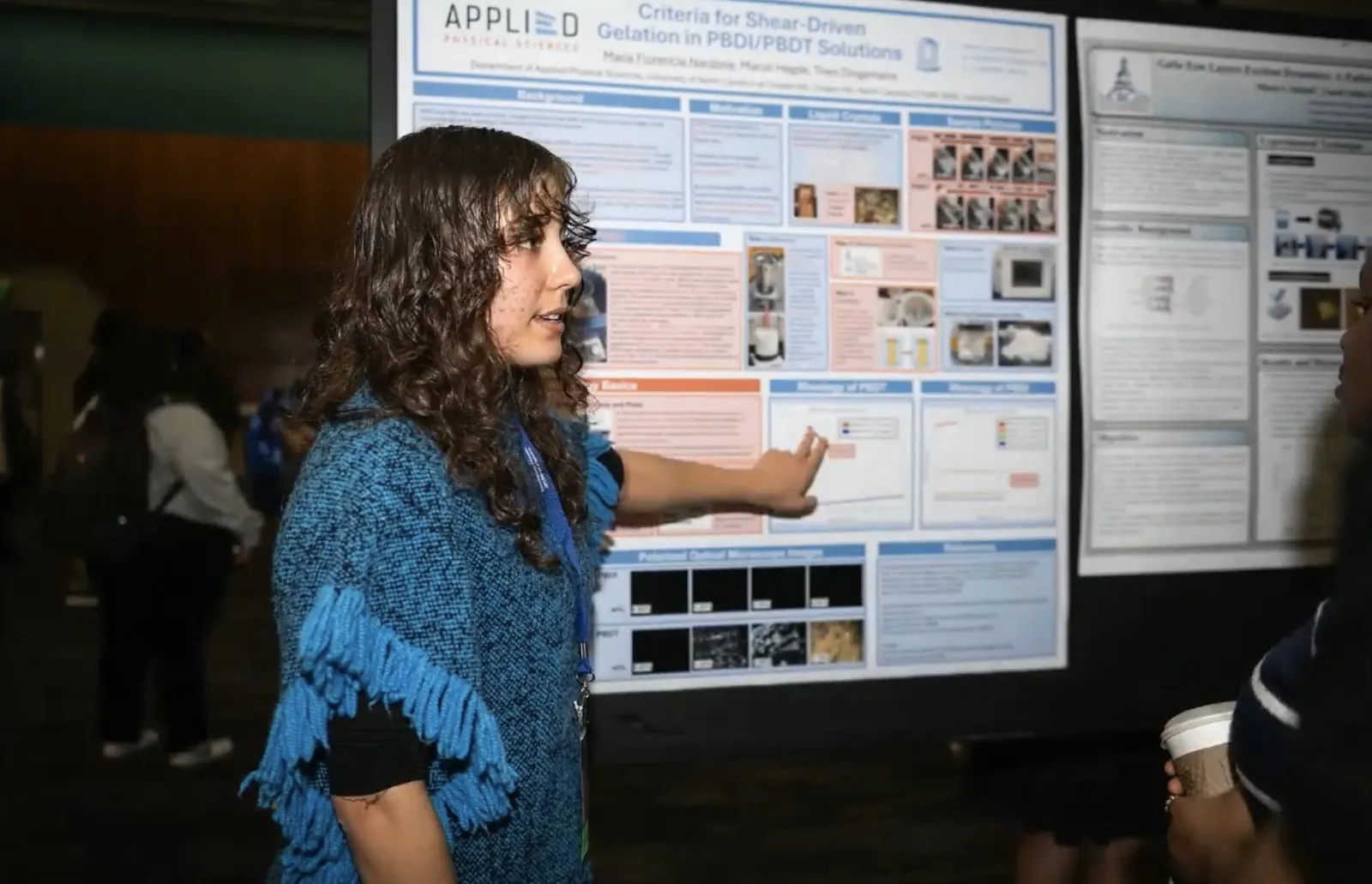
I presented this work at the National Society of Black and Hispanic Physicists conference and received a Presentation Award for it in fall 2025. The poster is below.