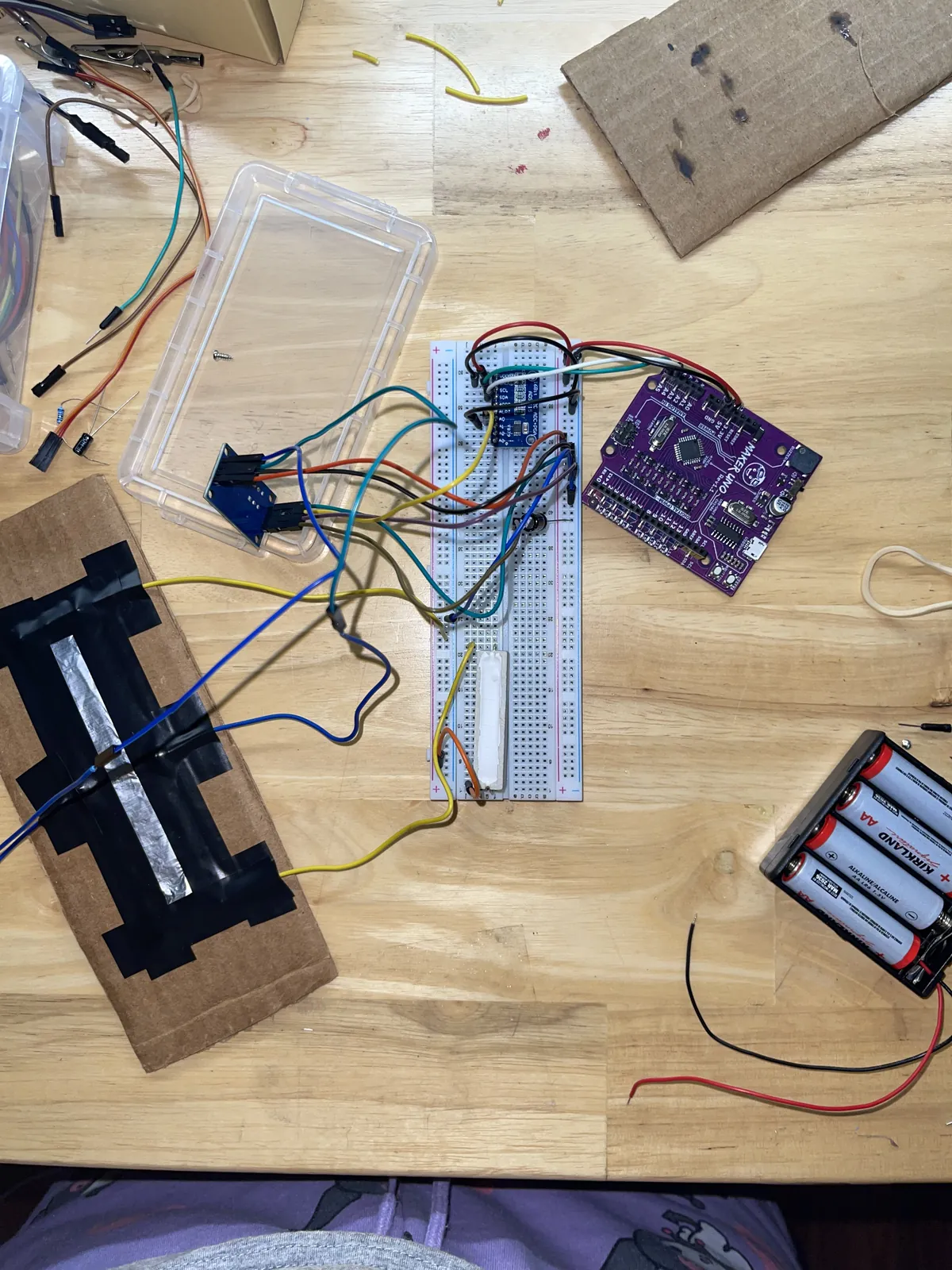
Embedded Instrumentation
I have been curious about electronics and experimenting with them for as long as I can remember, and for the past two years I have been at it hardcore: building instruments around microcontrollers, from schematic capture to hand-soldered board to firmware, on Arduino, ESP8266, and Teensy 4.1. This is the work that made me want to do hardware for a living.
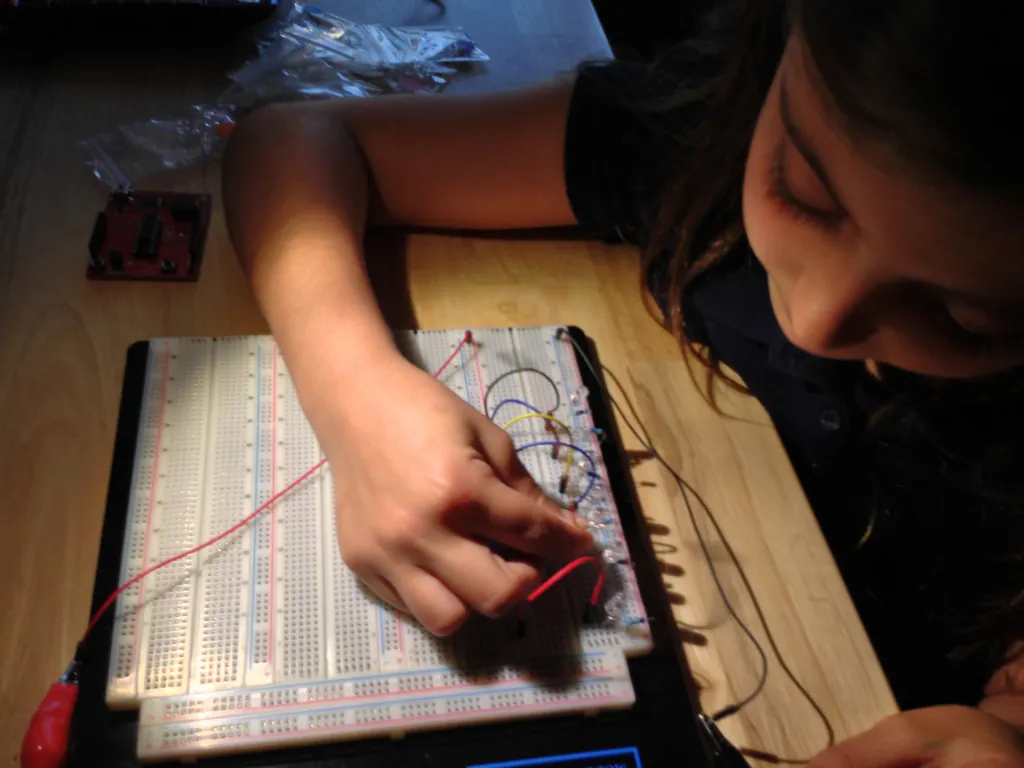
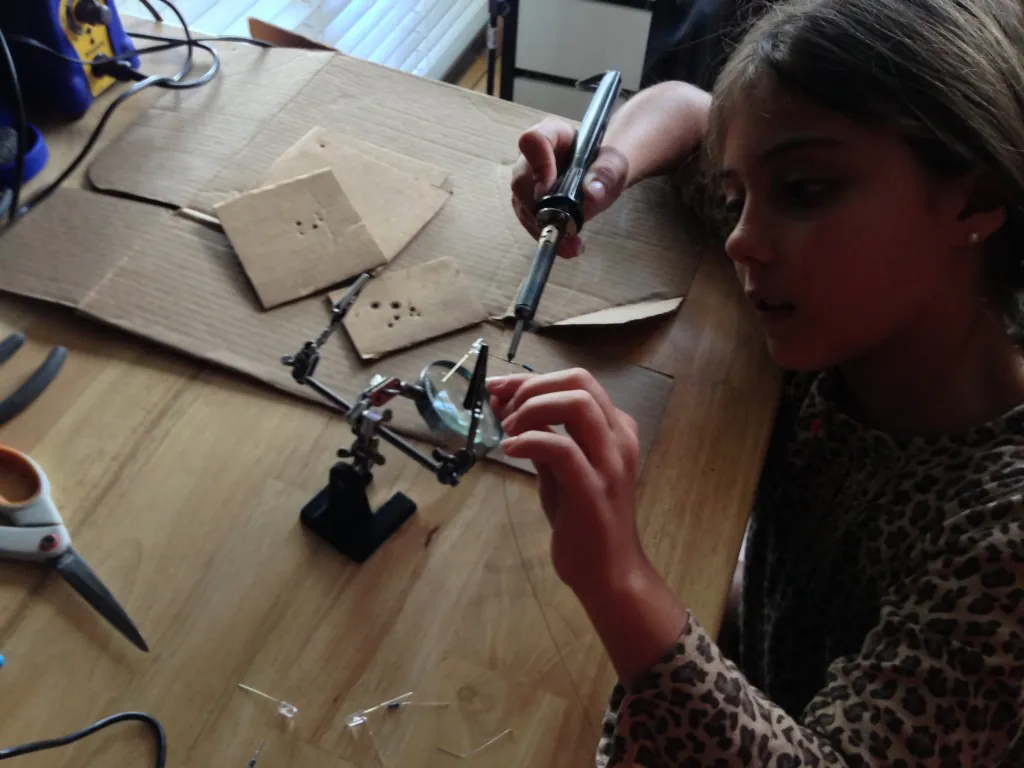
It started in third grade
I was eight when I built my first real circuit, a science project on the Aries constellation. I printed a star map, glued it to cardboard, punched a hole for every star, and soldered an LED and resistor pair into each one. A TI MSP430 LaunchPad drove them all: the C program blinked every star at power on, then each press of the button stepped through the constellation one star at a time. The 2013 build log has the wiring, the code, and the video of me rehearsing the presentation.
Aries constellation build log (2013)Boards and robots
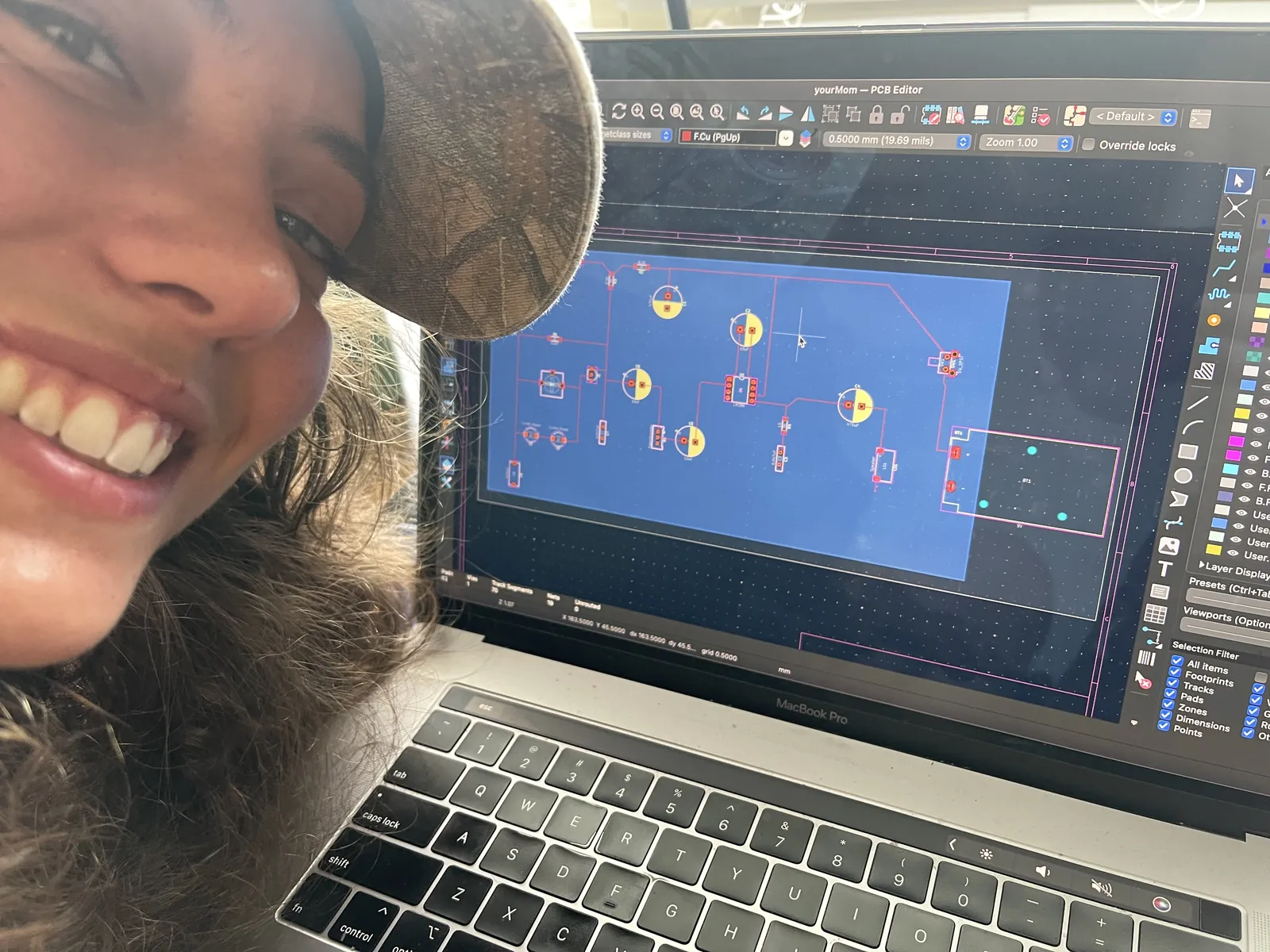
I designed PCBs, both schematic and layout, soldered prototypes, and built interactive physics demonstrations and mini robots with IMUs, encoders, and closed-loop PID motor control. Underneath it all ran real-time signal conditioning and data acquisition pipelines written in embedded C and C++, with Python analysis on top.
Analog and digital from scratch
Alongside the microcontrollers I built circuits from discrete components: radio receivers, MIDI-controlled audio interfaces, light-activated switches on the 555 timer, Schmitt triggers, logic circuits, and a PID controller. In the electronics lab I built a ring oscillator to measure gate propagation delay, a JK flip-flop ripple counter, and MOSFET and BJT switching circuits with flyback protection, and drove motors with hardware-timed PWM through a LabVIEW DAQ pipeline. I also built a Hall effect demonstration used to teach magnetism to physics students.
Watch them run
Several of these projects ended up on video, with motors, sensors, and effects boxes shown working:
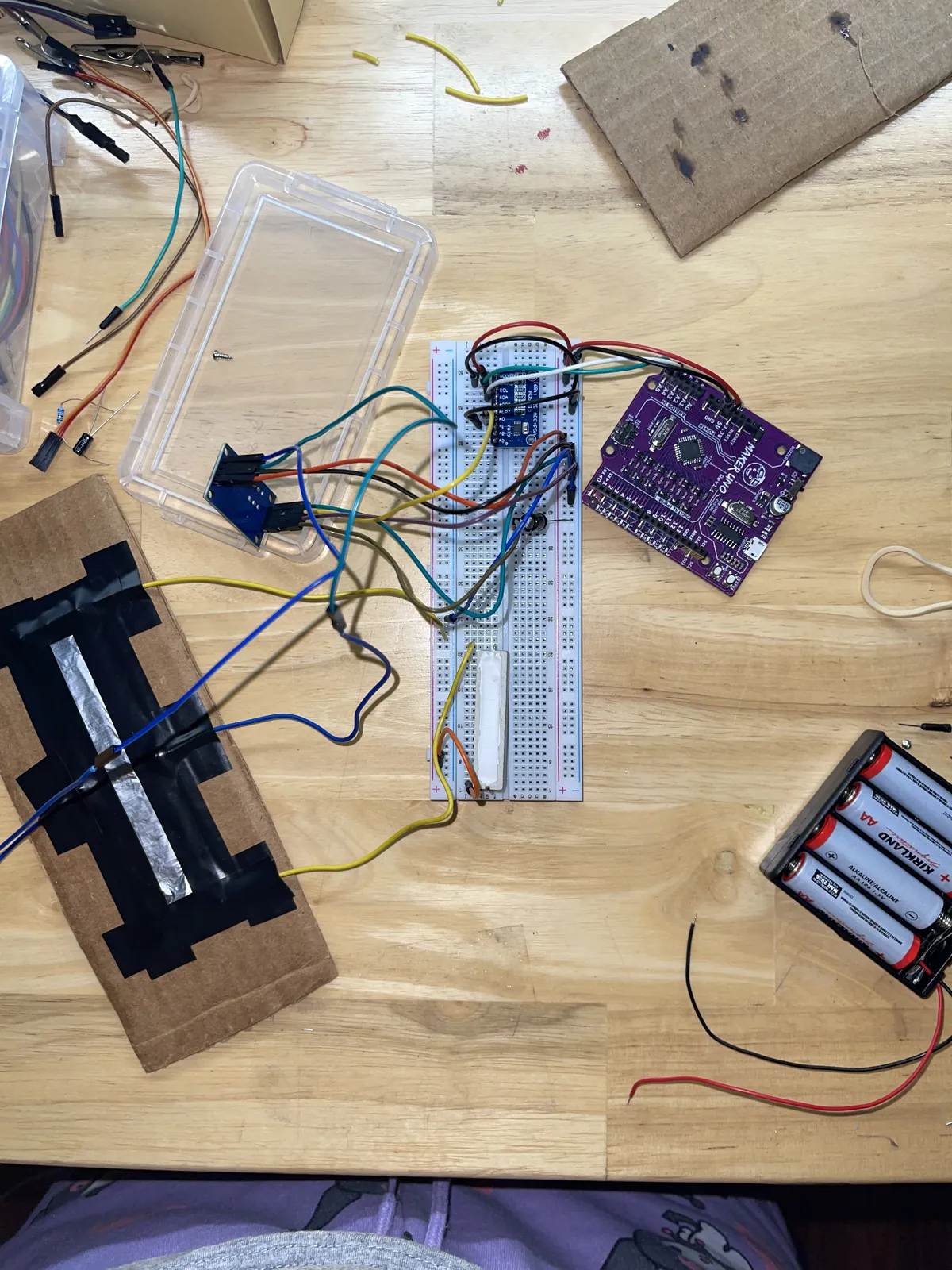
- ▶ Servo motor + photoresistor
- ▶ Stepper motor
- ▶ 555 timer remote lab
- ▶ Temperature sensor
- ▶ Proximity sensor
- ▶ Potentiometer FX
- ▶ 3H-3FX